
Self-consumption or a solar park: two different engineering philosophies
The same technology, a different logic: saving on the bill versus selling energy.
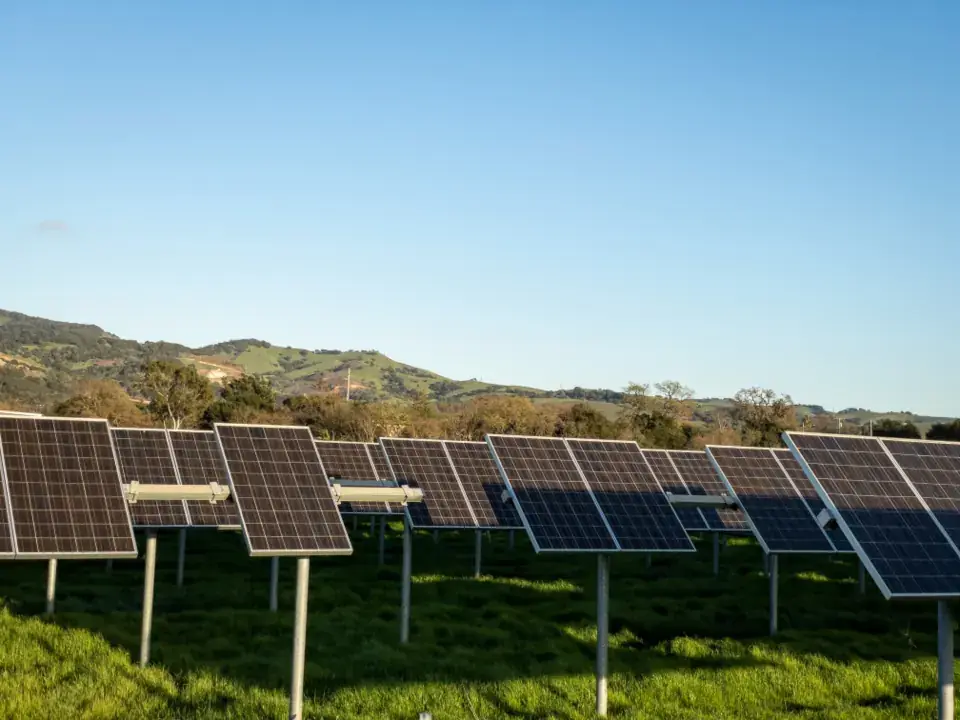
Panels, inverters and batteries look the same on a house roof and in a large solar park. But the two kinds of system have different goals, and the goal drives sizing, component choice, risks and how success is measured.
Self-consumption systems: homes and businesses
The starting point is the load profile – when and how much energy the site uses. The goal is to maximise self-consumption and the savings on the electricity bill.
- Sized to consumption, not to the maximum roof area.
- A battery shifts daytime surplus into the evening and night.
- Load shifting: water heater, heat pump, appliances and EV charging during production hours.
- Heat pump and EV charger integrated into one control logic.
- Export to the grid is a by-product, not the main goal.
- Payback comes from avoided purchases at the retail price, which is usually higher than the price received for exported surplus.
Utility-scale solar parks: selling energy
A park has no load of its own. It is a project to produce and sell energy, so the goal is maximum yield and revenue, and the lowest cost (LCOE) per kWh produced.
- Grid connection capacity and permitting often set the project size more than the available land.
- Trackers versus fixed mounting, the DC/AC ratio and clipping.
- Market price exposure: prices fall in sunny hours (cannibalisation), and negative prices can occur.
- Sales under a long-term PPA or on the exchange, each with a different risk profile.
- Storage for arbitrage (charge when prices are low, discharge when high) and for balancing.
- O&M: availability, performance ratio (PR), monitoring and fast fault response.
- Financing and bankability: yield assessments, contracts, warranties and technical due diligence for lenders.
Comparison
| Self-consumption (home / business) | Solar park | |
|---|---|---|
| Main goal | Savings on the bill | Revenue from selling energy |
| Starting point | The site's load profile | Grid capacity, land, permits |
| Measure of success | Self-consumption share, avoided purchases | Yield, revenue per kWh, LCOE |
| Sizing | To consumption and future loads | To the grid and project economics |
| Battery | Shifts surplus to the evening | Arbitrage and balancing |
| Grid export | A by-product | The main product |
| Mounting | Roof, fixed, sometimes east-west | Trackers or fixed, optimised DC/AC |
| Market risk | Low, linked to the retail price | High: cannibalisation, negative prices |
| Operation | Monitoring and automations | Professional O&M, availability, PR |
| Financing | Own funds, grant programmes | Project finance, bankability |
Why the advice differs
A good decision for a park can be a poor one for a house, and vice versa. Filling the whole roof may look attractive, but if most of the energy is exported at a low price, payback gets longer. For a park, the logic of "as much as the site needs" does not exist – the grid, the market and the financing decide.
How Enerwise Consult helps
- Homes and businesses: load-profile analysis, PV and battery sizing, self-consumption logic, heat pump and EV charger integration, quote comparison.
- Solar parks: independent technical review of the concept and quotes, comparison of configurations (trackers or fixed, DC/AC, storage), review of yield assumptions and the O&M plan.
Don't start by buying equipment. Start with the right analysis.
Tell us briefly what you are planning or what you want to improve. We will suggest a suitable package and a clear scope.
Send an enquiry